Why do small inconveniences ruin my whole day
A cancelled train, coffee spilled on a keyboard, or someone stealing your parking spot. These events cost ten minutes at most. Yet by evening, the entire day feels spoiled. It is often difficult to explain why such small things have this effect.
The London flood
In 1908, G. K. Chesterton wrote about London flooding while he was away. He joked that his neighborhood, Battersea, must now resemble Venice, with meat delivered to the butcher by gondola. The joke was his, not advice for anyone standing in floodwater.
Chesterton pivoted to ordinary weekly troubles. He argued that most things that make people swear or cry happen in the mind. He did not claim all pain is imagined; he noted that while a toothache can be endured, it is hardly enjoyable. His focus was on a different kind of distress.
The player and the comic
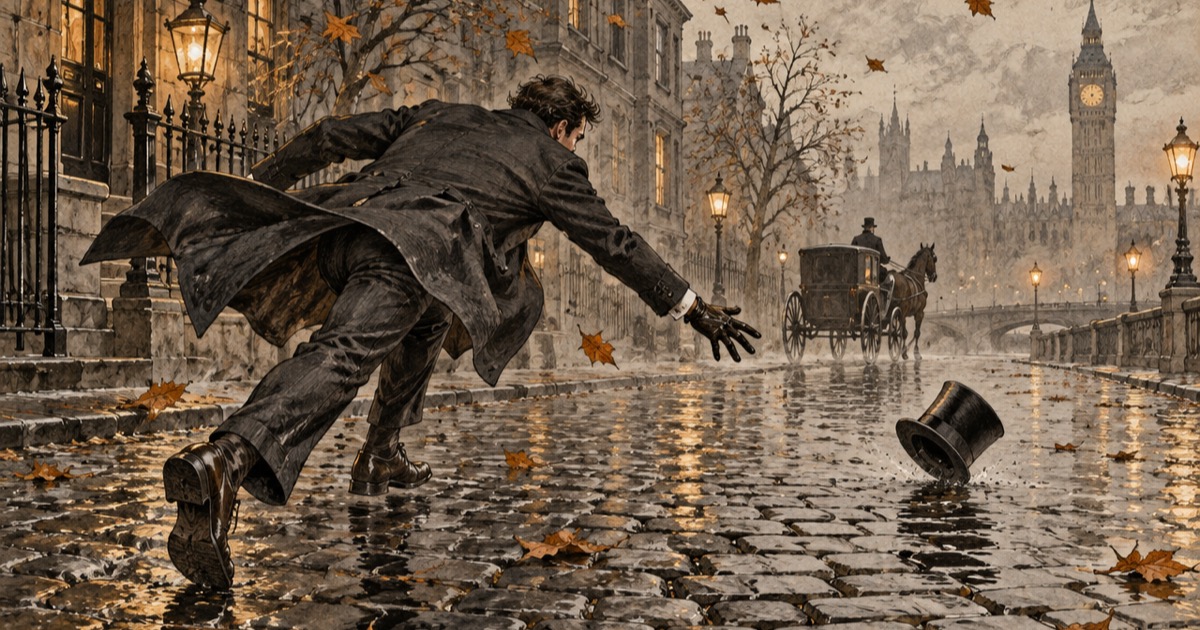
He used the example of a man chasing a hat blown away by the wind, which is unpleasant but not because of the physical effort. People run faster after a ball.
“There is an idea that it is humiliating to run after one’s hat; and when people say it is humiliating they mean that it is comic.”
— G. K. Chesterton, «On Running After One’s Hat», All Things Considered, ninth edition, 1915
The physical action is identical in both cases. In a game, he is a player. On the street, he is simply a man who lost his hat while others watch.
The broken picture
Small inconveniences rarely stop a task. The train eventually arrives; the report gets written. Instead, the event damages a mental image: the version of the day as it was planned and your place within it. This is the image of the calm person who arrives on time or the competent professional who does not spill coffee.
Ten minutes are enough to crack that picture. The rest of the day is spent staring at the crack and at the person who allowed it to happen.
Chesterton described this shift in one line:
“An adventure is only an inconvenience rightly considered. An inconvenience is only an adventure wrongly considered.”
— G. K. Chesterton, «On Running After One’s Hat», All Things Considered, ninth edition, 1915
The event does not change. What changes is what the event seems to say about you.
The man on the street
Which picture of myself does a small inconvenience break, if ten minutes of it can last until night?
Epimelea is an app built around the existential school. The conversation carries over from one meeting to the next. The archive is encrypted on the device and belongs to the person who wrote it.
About the app: an AI therapist for long-term therapy
This page is about a school of psychotherapy. It is not medical advice and not emergency help. If you are in danger right now, contact your local emergency number, or find a helpline in your country at findahelpline.com.


The first two meetings are free.