

Epimelea
Whose life is this, and why is it like this.
Freedom and choice, loneliness, meaning, mortality — what every life is made of. Here there is a conversation that keeps going as long as it needs to.
Existential therapy with an AI therapist who remembers everything you’ve said. In writing or out loud, even at three in the morning.
The first two meetings are free.
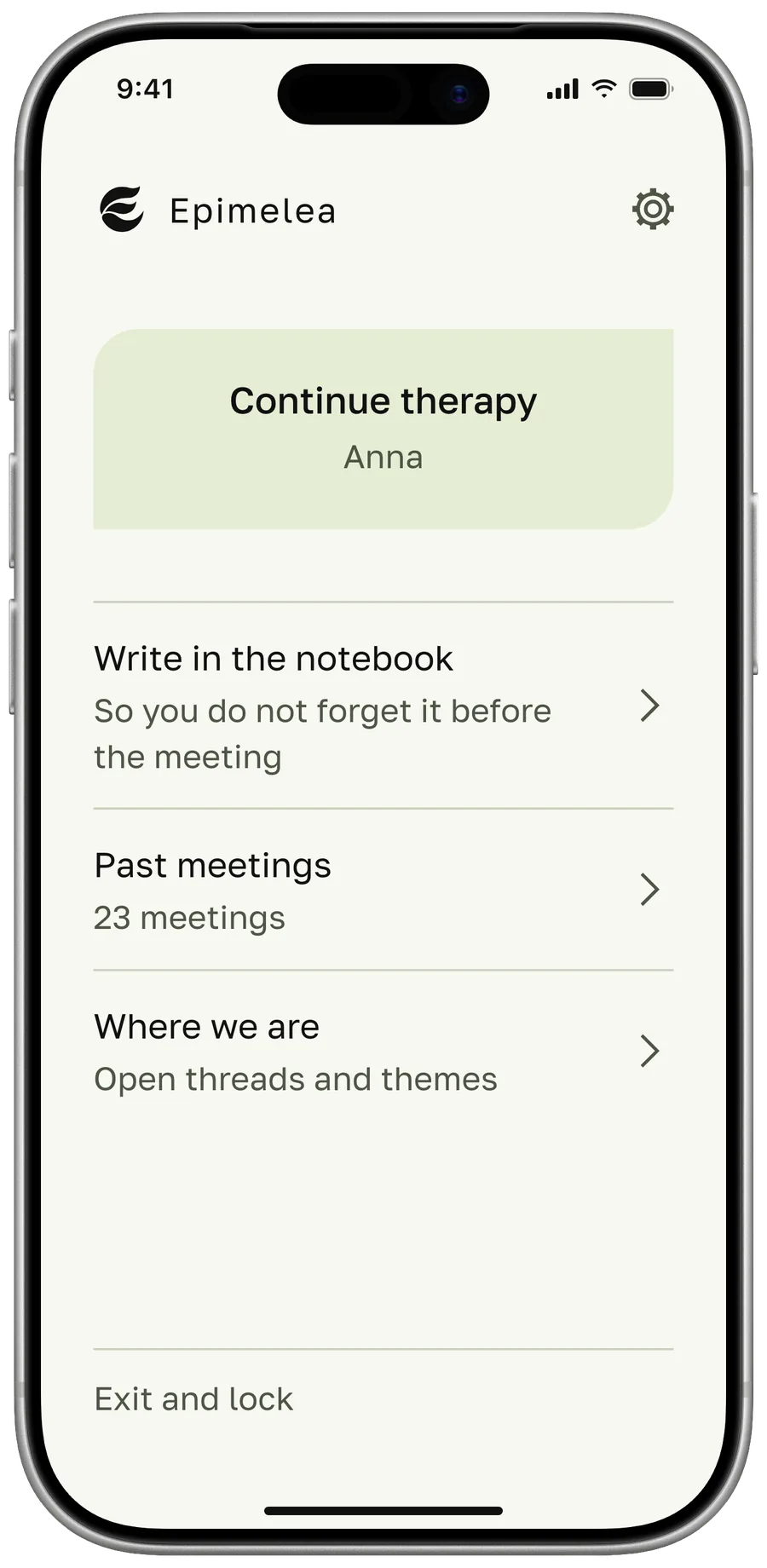
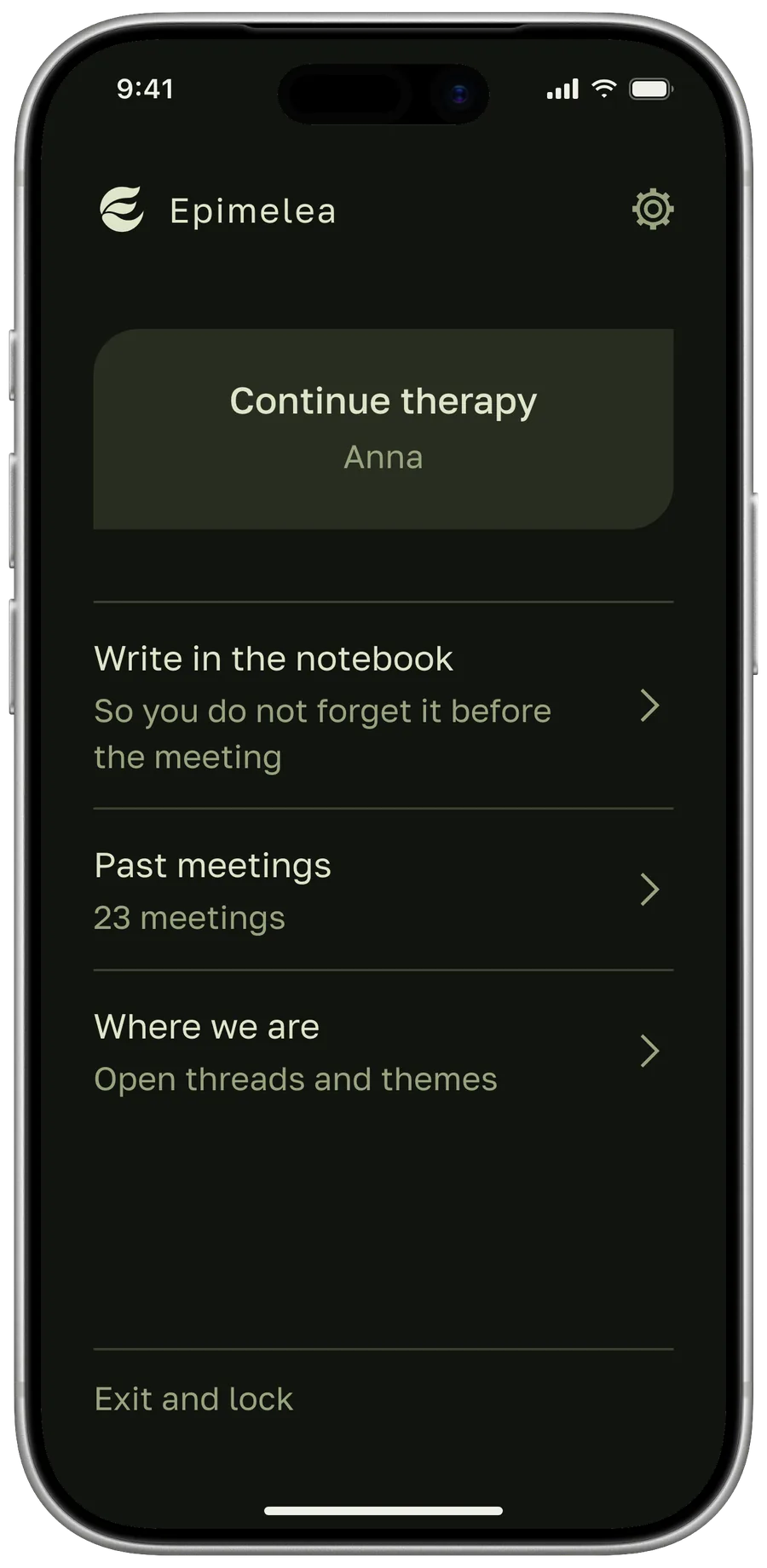
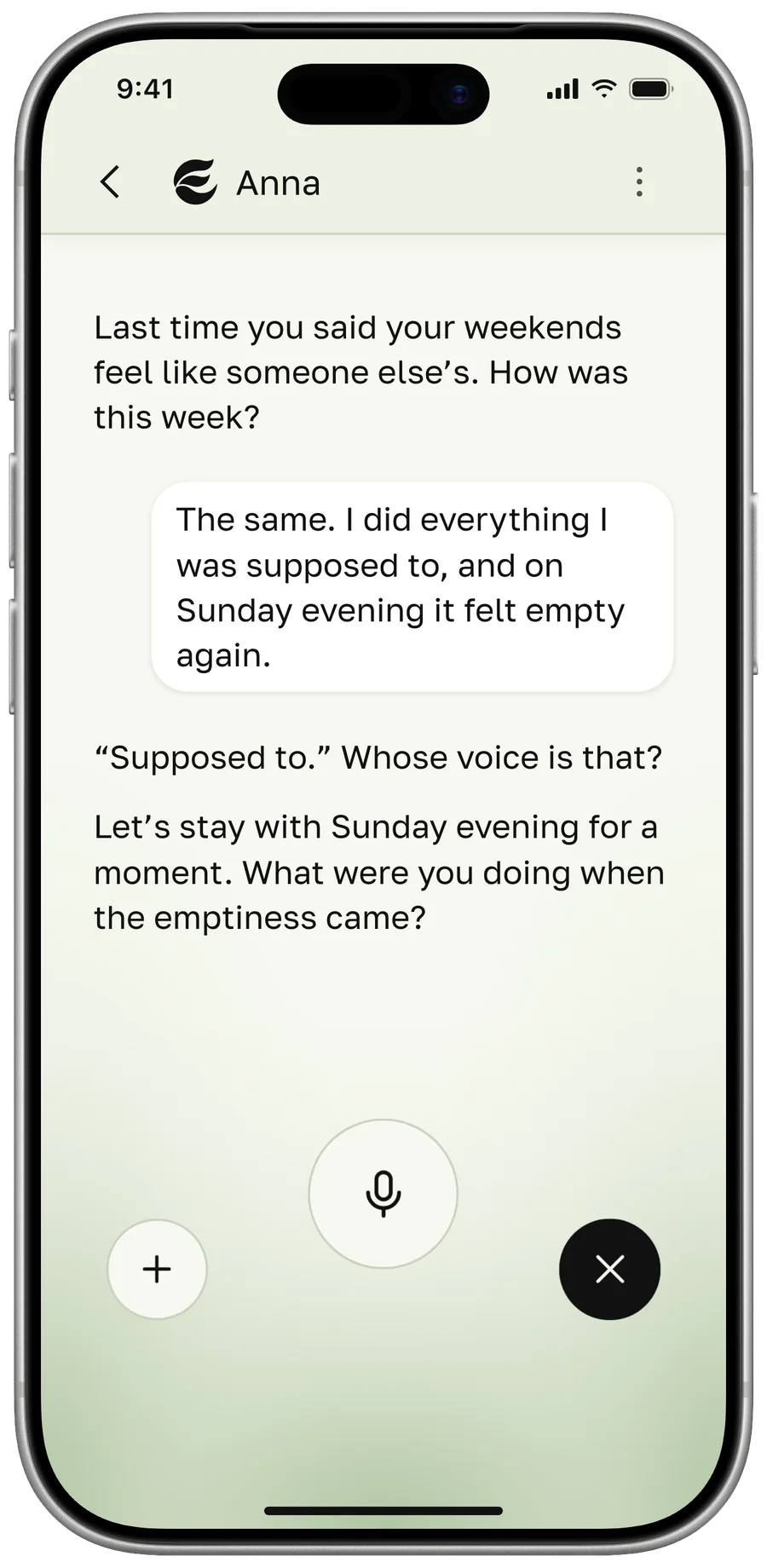
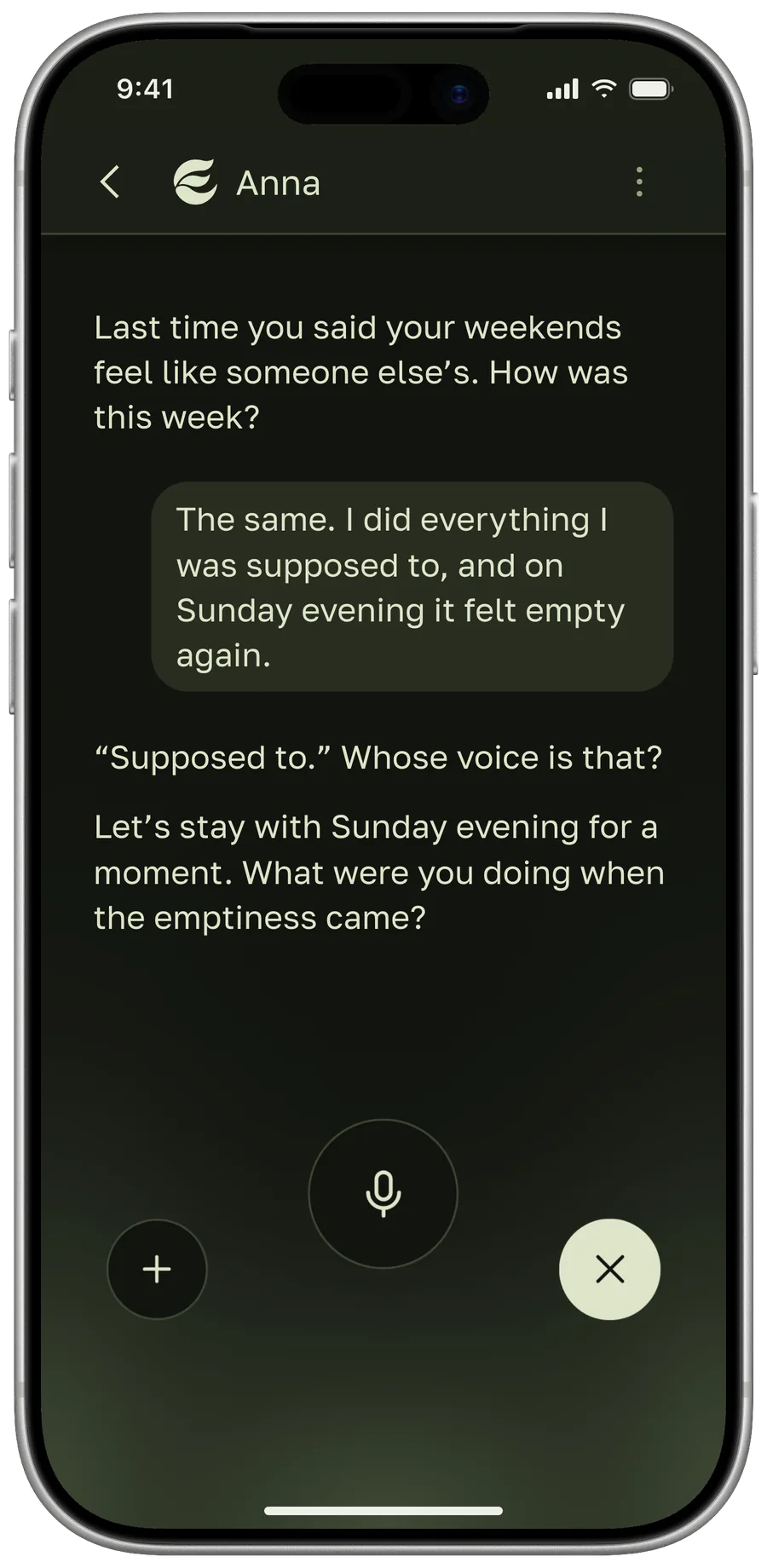
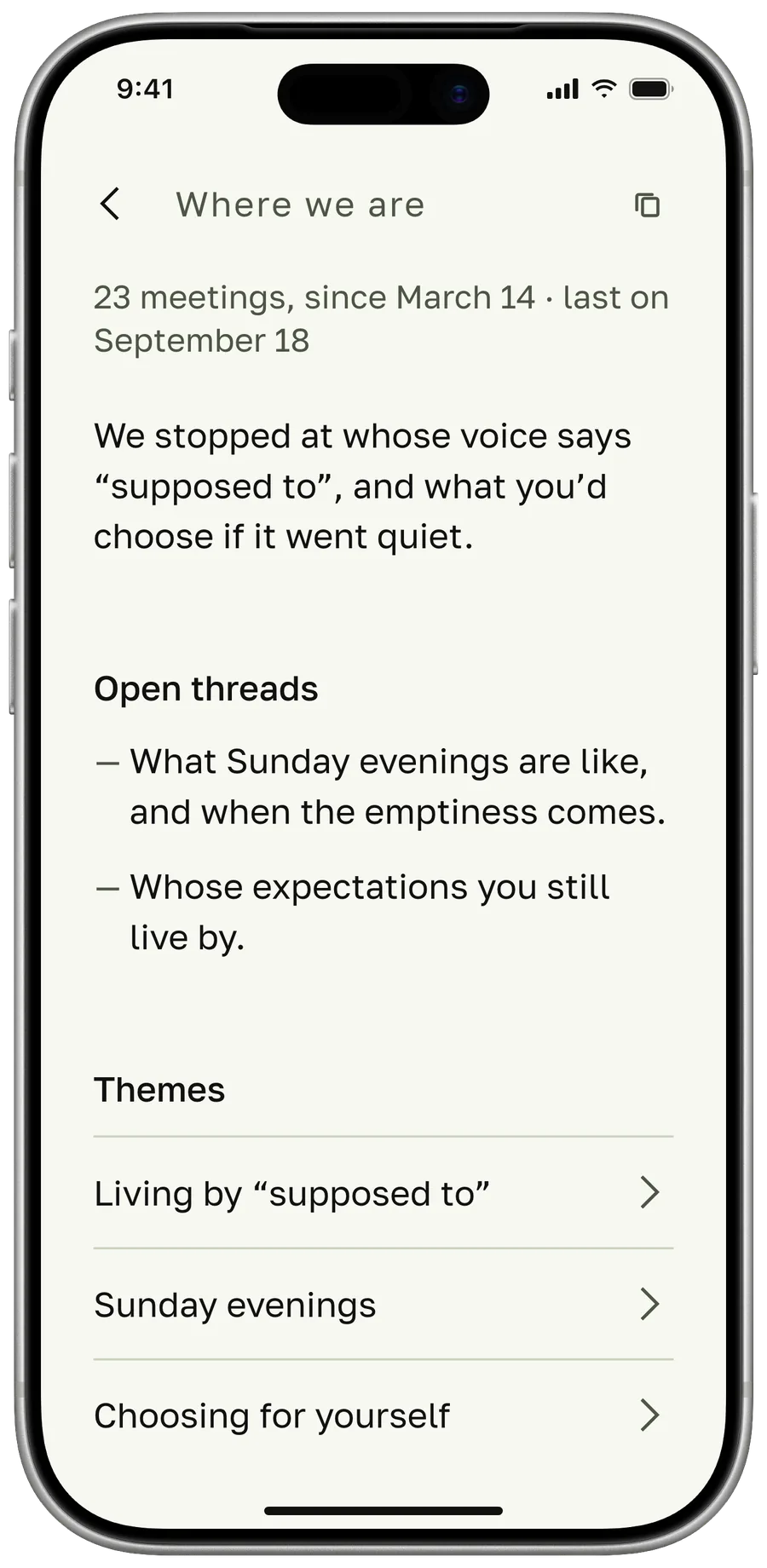
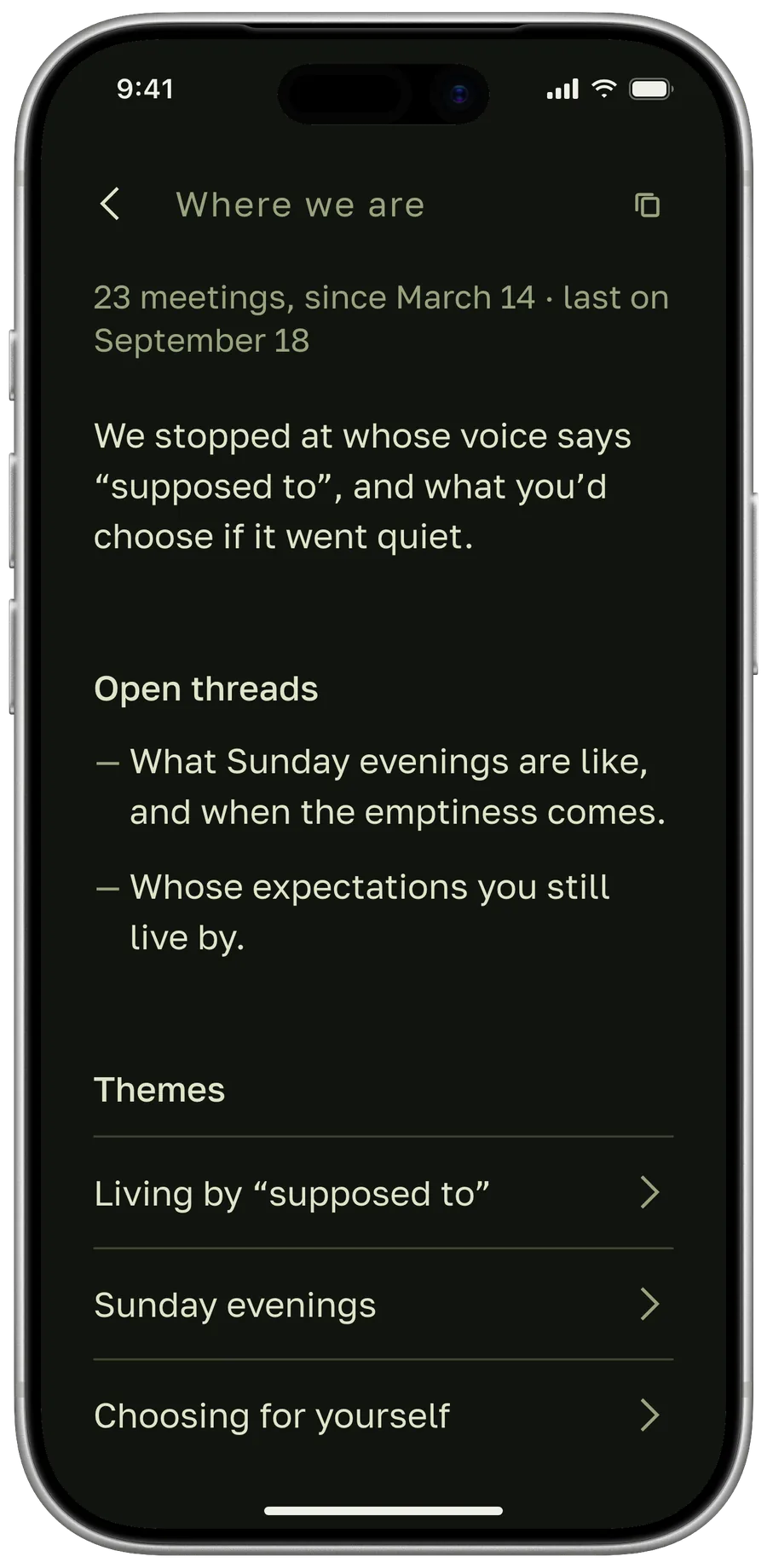
Existential-humanistic, the school of Yalom and Frankl. A conversation about freedom and choice, loneliness, meaning, mortality. Every life is made of them.
The therapist helps you understand what is happening to you and what you can do about it. You find the answers yourself, so they stay with you.
No timer, no limit on how many meetings.
The therapist remembers your whole history, not just the last conversation.
You can write or speak, by day or at night. The voice does not turn cheerful when things are hard.
The American Psychological Association has answered this in a health advisory. We checked the app against its list, and we say plainly where there is no clinical research yet. Read
Epimelea
Freedom and choice, loneliness, meaning, mortality — what every life is made of. Here there is a conversation that keeps going as long as it needs to.
The school of Yalom and Frankl. A conversation about how you have arranged your life, and what you can choose differently.
Therapy only works when you are frank. Everything is encrypted on your device: neither the people close to you nor the people who made the app can read it.
After each meeting what matters stays, not a summary. Three years on, the first meeting is as clear as yesterday’s.
Write, or talk without looking at the screen, by day or at night. The form switches in the middle of a meeting: start in text, move to voice, go back.
No feeds, no badges, no notifications. The app never asks for your attention and counts nothing: no streaks, no points, no habits.
Opens on your devices with the archive name and your password. Exports as text you can hand to a human therapist, or read yourself years later.
The first two meetings are free, with nothing to buy. After that, one subscription, everything included.
Many people have already tried this with a chatbot. An assistant helps with everything, from letters to recipes. A therapist does one thing: therapy, by rules written for that work.
An assistant is built to be useful and to agree with you. A therapist asks what you would rather not answer.
A chat is built around the conversation: close the window and it is over. Here everything is built around the archive. Nothing starts over.
In a chat you are a row in a company’s database: email, phone, and everything you have written. Here, no row holds your name, email or conversations. The archive opens only on your device or with your password.
Therapy works only if you speak openly. What stops that is one thought: someone will read this. Your children, your family, whoever picks up your phone, the people behind the app, hackers.
So the app is built differently. There is nothing here for any of them to read:
One caveat: the therapist is a language model, and your words reach it unencrypted. There is no other way to answer them. If you speak out loud, your voice also goes to the service that turns it into text. These companies keep a copy for thirty days and then delete it. Apart from that copy, your words are nowhere but on your device.
The archive is kept in the cloud, and that is the main copy; the one on your device is a working copy. Phones fall in water, get lost, get replaced, and years of therapy cannot be left on one alone. Save the archive with your own password, and you can sign in from any device with the archive name and the password. The whole history will be there. In the cloud nothing can be read: the archive opens only on your device.
On your device the archive is closed too, and it opens only while you are in the app. You set the lock yourself: the app locks after a time you choose, or the moment you switch to something else. It opens with your password, a short code or your fingerprint.
Years of work must survive a new phone, a move to another platform, and the end of this project. The archive exports to a folder of plain files. Any text editor opens them — today and in ten years.
No streaks, no notifications counting the days you were away, no feed.
Epimelea is not a medical service and not a substitute for a psychiatrist, a diagnosis, or medication. It is not emergency help: if you are in danger right now, contact your local emergency number or a crisis line.
US and Canada: call or text 988. UK and Ireland: Samaritans, 116 123. Australia: Lifeline, 13 11 14. Other countries: findahelpline.com.
$19 a month plus tax
A subscription covers new meetings. Everything written stays open after it ends: the archive is yours either way. Renews monthly. Cancel any time, right in the app.
The price may differ in the App Store and on Google Play.
In a browser, on iPhone and on Android — the same archive on all of them.
ἐπιμέλεια ἑαυτοῦ, epimeleia heautou — “care of the self”. An ancient practice: not a cure administered once, but work a person does on themselves over years, in dialogue with another. In The Hermeneutics of the Subject, Michel Foucault called it the ancestor of therapy. He also noticed that modern therapy kept the dialogue and lost the length. The name is about the length.