Why am I sure everyone noticed my embarrassing moment?
I mix up a colleague’s name during a meeting. A smile flickers, then the discussion resumes. By the end of the day, I have mentally replayed the scene ten times. I am certain of who witnessed it, what they concluded, and how they will view me tomorrow. No one has mentioned it. My conviction remains.
A curtain in a train compartment
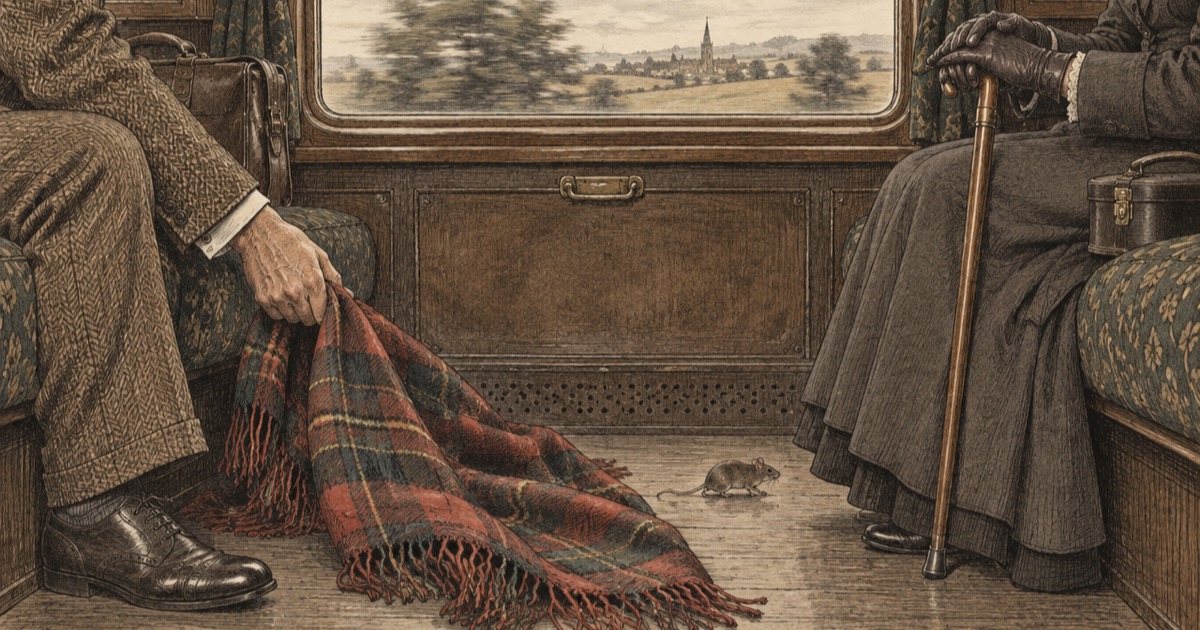
Saki’s story “The Mouse” was published in Reginald in Russia and Other Sketches (London, Methuen, 1910). Theodoric Voler boards a train after leaving a stable that smelled of mice. As another passenger appears to be sleeping, Theodoric discovers a mouse has entered his clothing.
He drapes a rug across the compartment and undresses behind it. The animal jumps, pulling the fabric down. The lady opens her eyes. Theodoric raises the rug to his chin and retreats into the corner.
“How much had she seen, Theodoric queried to himself, and in any case what on earth must she think of his present posture?”
— Saki (H. H. Munro), “The Mouse”, Reginald in Russia and Other Sketches (1910) (Wikisource)
Every reply feels like a judgment
Theodoric claims he has caught a chill, then suggests it might be malaria. The lady offers brandy and asks if he contracted the illness in the Tropics. He admits the presence of the mouse. She responds with polite calm, yet he hears only mockery. He concludes that she witnessed his entire predicament and finds his distress amusing.
As the train approaches its destination, he stops hoping she will return to sleep. He dresses while avoiding her gaze. At the station, she asks him to locate a porter, explaining that her blindness leaves her helpless at a railway station.
The audience of one
The lady had her own journey and challenges. To her, Theodoric’s explanations were merely polite small talk from a stranger with a cold. To him, the same interaction felt like an interrogation, and the verdict he feared was entirely his own construction.
What do I actually know about what they saw, and what did I add myself?
Epimelea is an app built around the existential school. The conversation carries over from one meeting to the next. The archive is encrypted on the device and belongs to the person who wrote it.
About the app: an AI therapist for long-term therapy
This page is about a school of psychotherapy. It is not medical advice and not emergency help. If you are in danger right now, contact your local emergency number, or find a helpline in your country at findahelpline.com.

