Why do I apologise for my house when people visit?
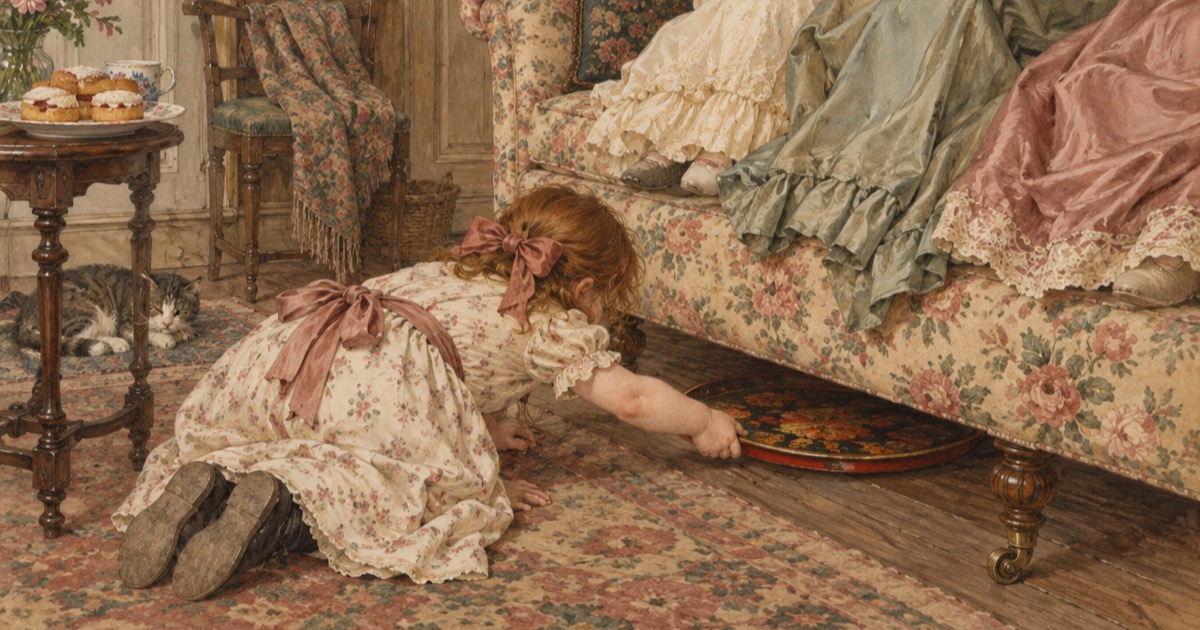
The visitor is still wearing their coat, and I have already started apologising. The place is messy. It is too small. The sofa needs replacing, though I have not replaced it yet. They call it lovely. I insist it is not. We go through this every time, and the house has not changed since the last visit.
A tea party in a doll’s house
In the first chapter of Cranford (1853), Elizabeth Gaskell writes about a small English town. Women with little money run the place. They do not talk about finances. Mrs Forrester hosts a gathering in what Gaskell calls her “baby-house of a dwelling”. She has one servant, a young girl from a charity school. The girl interrupts the guests on the sofa to ask if she can get the tea-tray from under it.
No one reacts. The women keep talking about servants’ halls and housekeepers as if Mrs Forrester had a full staff. The hostess sits in state, pretending not to know which cakes are arriving.
“she had been busy all the morning making tea-bread and sponge-cakes.”
— Elizabeth Gaskell, Cranford, chapter I, “Our Society” (Project Gutenberg #394)
Everyone knows. Everyone knows that everyone knows. The party runs on it.
Elegant economy
Cranford has a specific term for this. Poverty is never called poverty. It is “elegant economy”, and spending money is “vulgar”. The narrator describes this as a form of sour-grapeism that kept the community peaceful and satisfied. The hostess hides, and the guests help her.
Then Captain Brown arrives and announces loudly in the street that he is poor. That is why he refuses to take a certain house. The town is appalled. A year later, his opinions are quoted as authority.
Who the apology is for
My apology at the door works a little like Cranford’s tea party. I name the flaw before the guest can notice it. If they do notice it, they will only be agreeing with me. They say, “Oh, it’s lovely.” Two people protect a judgement that neither has voiced.
But my friend came to see me, not to inspect the sofa. Captain Brown suggests the judge may be someone else. When I apologise for my house, who am I picturing in the doorway?
Epimelea is an app built around the existential school. The conversation carries over from one meeting to the next. The archive is encrypted on the device and belongs to the person who wrote it.
About the app: an AI therapist for long-term therapy
This page is about a school of psychotherapy. It is not medical advice and not emergency help. If you are in danger right now, contact your local emergency number, or find a helpline in your country at findahelpline.com.

