Why do I gladly do work for others but not at home?
You are at a friend’s house at eight in the morning with packing tape and a van, staying until the last box is carried up the stairs. That same Sunday, you look at the shelf you have meant to fix since spring. You pick up the drill, put it down, and make coffee instead. It is the same work, with the same hands, at a different address.
A man who was never idle
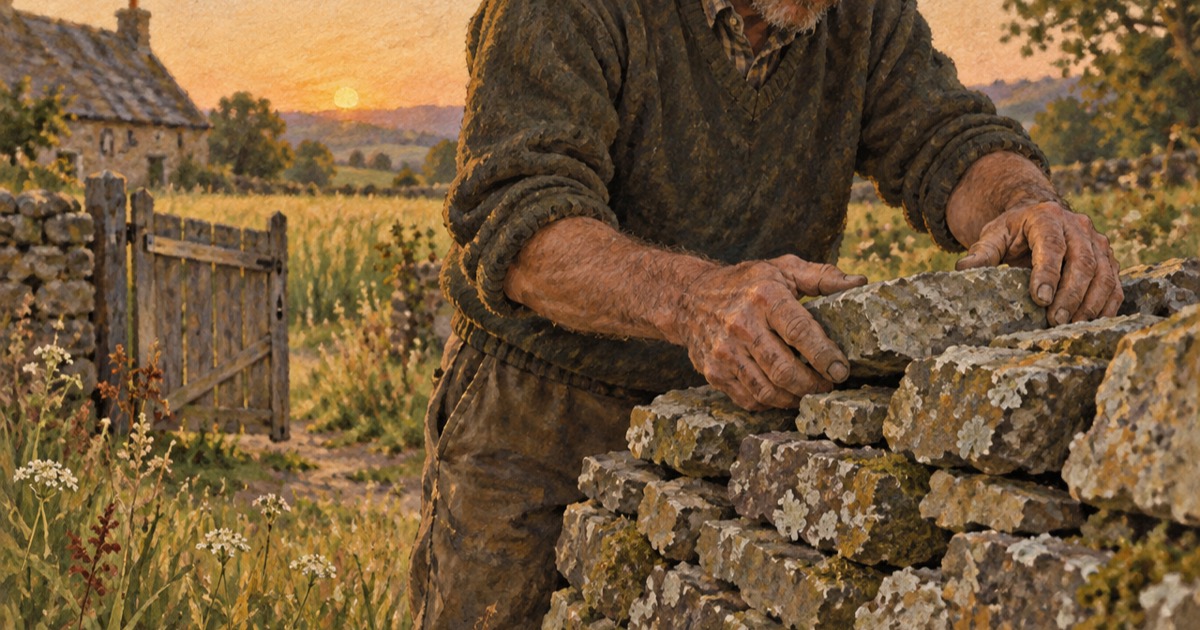
Irving opens “Rip Van Winkle” long before the sleep. Rip is no idler. He fishes all day without a single bite and carries a heavy gun through the woods for hours. He raises stone fences at husking frolics. The village women send him on errands their husbands will not run. Irving sums it up:
In a word, Rip was ready to attend to anybody's business but his own; but as to doing family duty, and keeping his farm in order, he found it impossible.
— Washington Irving, "Rip Van Winkle", The Sketch-Book of Geoffrey Crayon (Project Gutenberg #2048)
The worst field in the county
Rip has an explanation, and it is about the land. Irving lets him say that it was no use working his farm, that it was "the most pestilent little piece of ground in the whole country." Everything on it went wrong, in spite of him.
Look at what the explanation does. Rip lifts stones all day, so it cannot be strength, and it cannot be effort. The trouble has moved into the soil. His own field is cursed, and other people's fields are simply fields.
What the neighbour pays
Work for a neighbour comes with an ending. The wall is built, someone says thank you, there is cider, and Rip walks home. Nobody judges him by how straight that wall stands; if it leans, it is still a favour.
His own field has no ending and no thanks. Every weed is his, and so is every failed crop. Each morning it tells him what kind of farmer he is. The ground looks pestilent.
None of this makes Rip a bad man. The village loves him, and children follow him around. He gives generously. He just cannot give to the one place where the result would be his to keep.
The other side of the fence
What would change in this work if nobody else ever saw it, and what am I waiting to hear when I do it for someone else?
Epimelea is an app built around the existential school. The conversation carries over from one meeting to the next. The archive is encrypted on the device and belongs to the person who wrote it.
About the app: an AI therapist for long-term therapy
This page is about a school of psychotherapy. It is not medical advice and not emergency help. If you are in danger right now, contact your local emergency number, or find a helpline in your country at findahelpline.com.


The first two meetings are free.