Why do I like feeling melancholy?
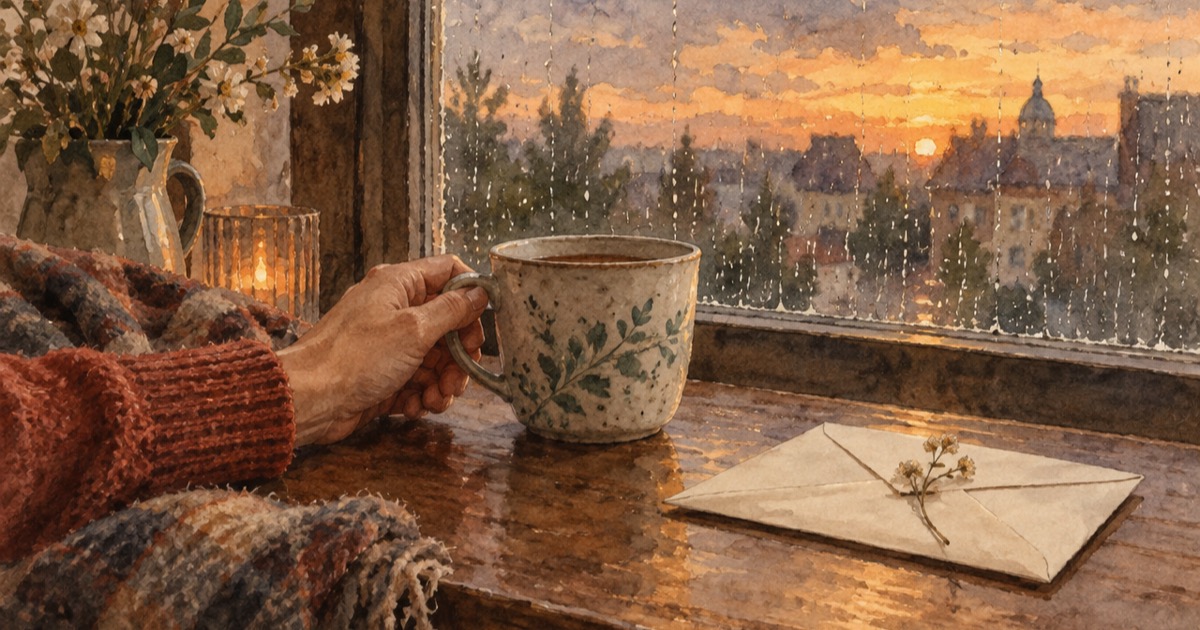
A summer evening is warm. Friends are at the table, the light is gold, and no one is rushing. In the middle of this, a small ache appears. Nothing is wrong. You simply realize the moment will end and will not happen exactly this way again. The strange part is that you do not want the ache to leave. Without it, the evening would feel thinner.
People who notice this often worry. Liking sadness feels like a flaw that needs fixing. John Keats saw it differently.
Where melancholy lives
In his “Ode on Melancholy”, Keats does not place melancholy in dark corners. He puts her beside the things we love most:
She dwells with Beauty--Beauty that must die
— John Keats, "Ode on Melancholy", stanza 3, Poems Published in 1820
The fact that beauty dies does not spoil it, as this fragility is part of what beauty is. Keats describes where melancholy resides:
Ay, in the very temple of Delight Veil'd Melancholy has her sovran shrine
— John Keats, "Ode on Melancholy", stanza 3
Melancholy does not wait at the door to replace delight. She is inside the temple, veiled. Keats suggests that only those who taste joy fully ever encounter her, and a person who holds back or remains half-distracted misses her. The present person does not.
Sadness as a way of feeling joy
The ache at the table is not a sign of a mood disorder, but the part of you that understands the nature of the evening. Joy that will end feels different from joy you imagine will last forever. Melancholy allows the ending to enter the moment while the moment is still here.
This is different from the feeling that arrives after something is gone. This is about the feeling that arrives during, while it is still in your hands.
This is not grief or depression. Those are different states that require different care. Keats describes a sadness that accompanies pleasure rather than replacing it.
The joy that knows
So the question is not why you like being sad. It may be closer to this: which joy do you feel only when you remember that it will pass?
Epimelea is an app built around the existential school. The conversation carries over from one meeting to the next. The archive is encrypted on the device and belongs to the person who wrote it.
About the app: an AI therapist for long-term therapy
This page is about a school of psychotherapy. It is not medical advice and not emergency help. If you are in danger right now, contact your local emergency number, or find a helpline in your country at findahelpline.com.