Why do I enjoy being offended?
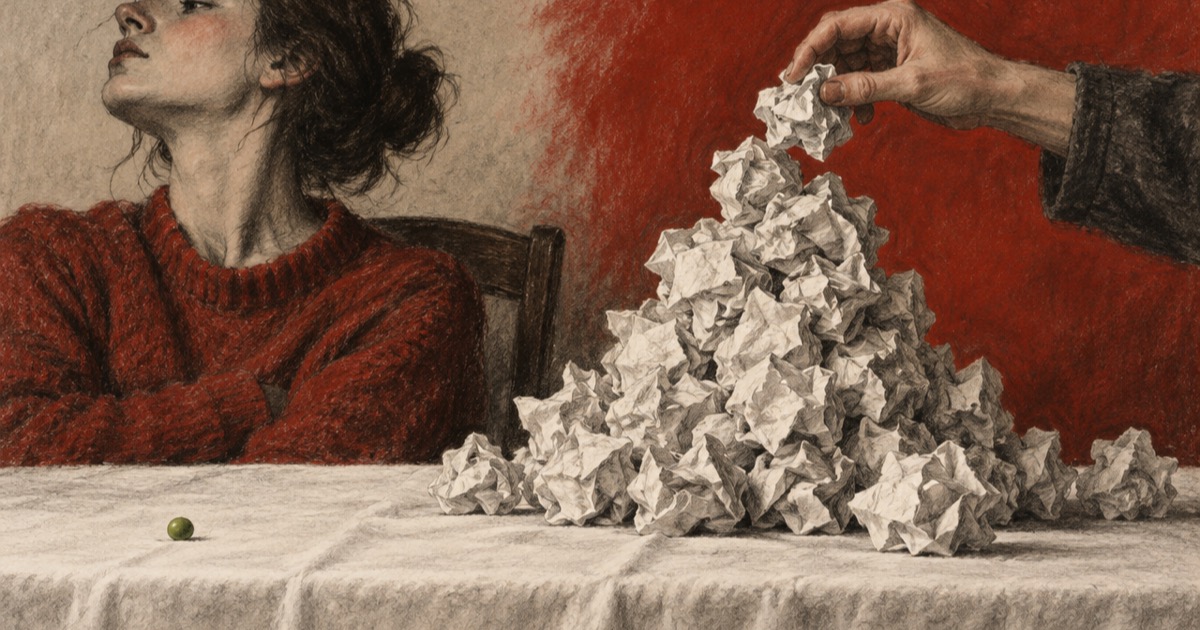
A friend sends a one-word reply to a long message. Someone forgets to thank you. You know these actions likely mean nothing. Still, you replay the scene on the way home. There is a strange warmth in that repetition. Being hurt feels good.
A question asked out loud
In The Brothers Karamazov, the elder Zosima addresses a man who continues to play the fool:
"You know it is sometimes very pleasant to take offense, isn’t it?"
— Fyodor Dostoevsky, The Brothers Karamazov, Book II, Chapter II, tr. Constance Garnett
Then he explains. "A man may know that nobody has insulted him, but that he has invented the insult for himself." He catches at a word and has "made a mountain out of a molehill." He knows all this. He still takes offense, and he is the first to do it.
What the pleasure is made of
Zosima does not scold but acknowledges the pleasure as real, which raises the question of what makes it pleasant. It might be feeling right. It could be the clarity of having a defined wrongdoer, a contrast to the ambiguity of ordinary days. Or it may provide a reason to distance oneself from another person without explaining why.
Self-deception is explored on their own page.
The finished insult
Dostoevsky leaves the man with his own awareness. What do I gain from an offense written by my own hand?
Epimelea is an app built around the existential school. The conversation carries over from one meeting to the next. The archive is encrypted on the device and belongs to the person who wrote it.
About the app: an AI therapist for long-term therapy
This page is about a school of psychotherapy. It is not medical advice and not emergency help. If you are in danger right now, contact your local emergency number, or find a helpline in your country at findahelpline.com.