Why do I feel like my things own me?
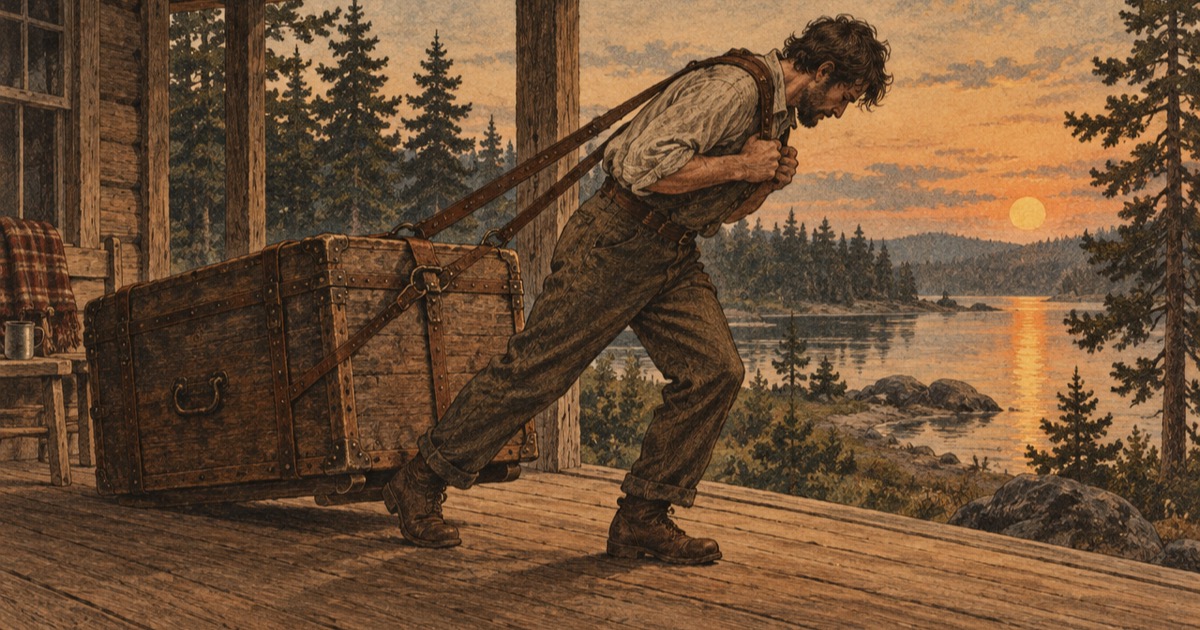
A new apartment often represents stability. Then comes the lease renewal, a sofa that fits no other room, and boxes in the closet that remain sealed. When a job offer arrives from another city, the first thought is not the career move. It is the furniture.
Who pulls whom
In Walden, Thoreau observes his neighbors in Concord as they farm, build, and buy. He notes:
“But lo! men have become the tools of their tools.”
— Henry David Thoreau, Walden, “Economy”
Thoreau does not argue against ownership itself. He focuses on the cost. He describes a man moving house who drags his trunks behind him like a horse in harness. The object was meant to serve the person. Now the person serves the object.
The promise of the object
Possessions usually arrive with a promise of safety or comfort, and that promise often outlasts the original reason for the purchase. Eventually, the object begins to dictate which doors remain closed.
Being happier with less has its own page. This is about the moment a possession sets the terms.
Before the next move
Thoreau leaves the calculation to the reader. Which of my things decides where I can go?
Epimelea is an app built around the existential school. The conversation carries over from one meeting to the next. The archive is encrypted on the device and belongs to the person who wrote it.
About the app: an AI therapist for long-term therapy
This page is about a school of psychotherapy. It is not medical advice and not emergency help. If you are in danger right now, contact your local emergency number, or find a helpline in your country at findahelpline.com.